How do you choose a software developer?
By David Kim, founder · Last updated 20 November 2026
Check they're a real business, and call two of their past clients. Get a written plan with dates and prices. Then pay in small stages, and see each stage working before you pay for the next. Software jobs go over budget often enough that these checks are worth it (Oxford study).
Why do software jobs go over budget?
Researchers at Oxford looked at 1,471 IT projects. On average, they cost 27 percent more than planned. One in six went much worse: about three times the planned cost, and almost 70 percent late.
Most of those were big projects, but small jobs go wrong for the same reasons. The plan is unclear, everything is built at once, or the job changes halfway.
Small stages keep the risk small. The UK government tells its own teams to start small, test and improve. Build it all in one go, and you get one chance to get it right.
How do you check a developer?
- Look up their ABN on ABN Lookup. Check it's active and the name matches.
- Ask for past clients, and call them. Ask what went wrong and how it was fixed.
- Ask to see software they built, working. Screenshots aren't enough.
- Ask who will write your code, and talk to that person.
What should the written plan include?
A written plan for a software job is often called a scope. business.gov.au lists what a contract should cover. For software, it should say:
- What will be built, in plain words.
- What "finished" means for each stage.
- When it starts and ends.
- What you pay at the end of each stage.
- How changes are priced and agreed.
- Who owns the code and the data. See who owns custom software.
MERIT.One-page scope
Hill & Co: quotes to invoices
- What we'll build
- Accepted quotes become invoices in your accounts
- Job sheets go to the floor when a quote is accepted
- One screen with every open job
- Price
- Fixed, and written here before you pay anything
- Timeline
- Weeks 1–2Weeks 3–4Weeks 5–6
- Who owns what
- Your data is yours. We own and look after the software, and the price to buy it is written here.
What are the warning signs?
- No written plan.
- A price that "depends", with no limit.
- Most of the money paid before the work starts.
- Nothing to see until the end.
- Fuzzy answers about who owns the code and the data.
- No past client you can call.
- A yes to everything. A good developer also tells you what not to build.
Is a one-person software firm risky?
It can be, so ask about it. Business Queensland says to ask any supplier what happens if they close down. With one person, getting sick or closing down hits harder.
These make the risk much smaller:
- The code is saved with a full history of changes, so another developer can take over.
- A buy-out price in writing, so you can take the code if they stop.
- Your data stays yours, in a format you can move.
- Small stages, so you never pay much for unfinished work.
Big firms have this risk too, because one developer often does most of your job and can leave. With a small firm, you talk to the person who builds it.
How long does it take?
It depends on the size. QSM, a company that sells planning tools for software projects, studied thousands of them. A typical one took about five months with five people. The smallest took a bit over three months. A link between two systems can take a few weeks.
However long it takes, you should see something working every two weeks or so.
How much of your time will it take?
About an hour or two a week, answering questions and checking each stage. Choose one person who knows the job well, and let them make the calls. Projects get stuck when nobody on your side can decide.
What should you ask on the first call?
- Who will build it, and can we talk to them?
- Can we call two past clients?
- Is the price fixed? What does each stage cost?
- How often will we see it working?
- Who owns the code and the data? What does it cost to buy the code?
- What happens to our software if you close down?
What would we do?
Ask us all of these. MERIT is small, and David builds the software himself, so you talk to him from the first call. Every written quote has a fixed price, the price to buy the software, and stages you see working every two weeks. Your data is always yours.
-
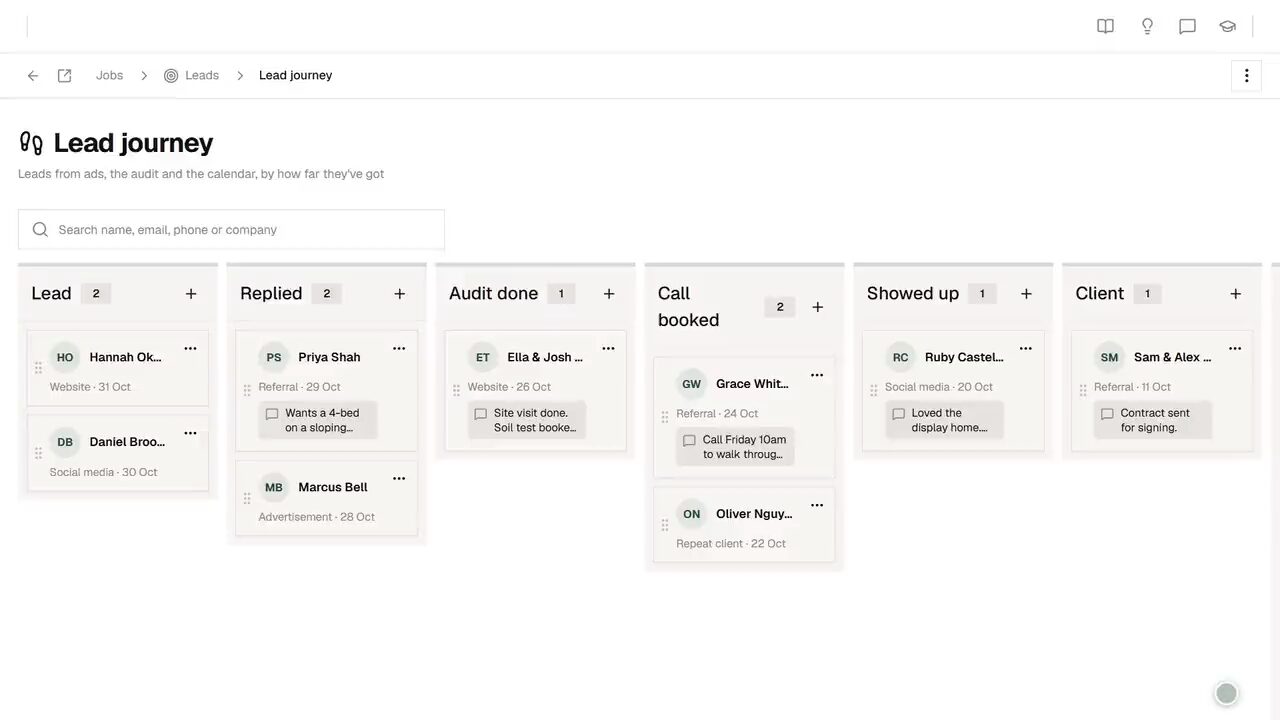 Marketing and e-signing, built for a home-builder platform.
-
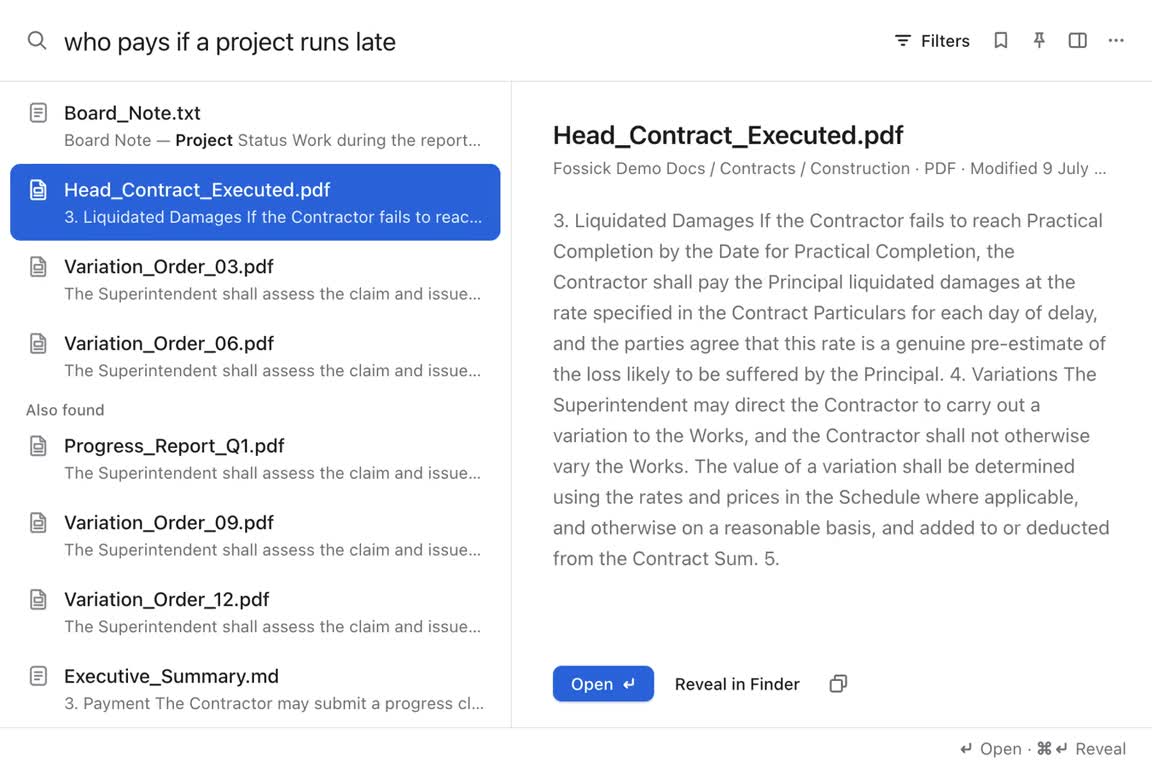 Fossick finds a document by what it says.
Book a free 30-minute call.
We look at where your team's hours go and tell you the first thing worth building, whether you hire us or not.
Not ready for a call? See what paperwork costs you or send us a note.
More guides
- Who owns custom software?
- How much does custom software cost?
- Custom or off-the-shelf software: which do you need?
- How to stop double entry
- See two systems we've built, running
Sources
- Bent Flyvbjerg and Alexander Budzier, Why Your IT Project May Be Riskier Than You Think, Harvard Business Review, 2011. 1,471 IT projects, mostly large.
- GOV.UK Service Manual, Agile delivery.
- Australian Business Register, ABN Lookup.
- business.gov.au, Suppliers.
- business.gov.au, Prepare a contract.
- Business Queensland, Finding and working with suppliers.
- GOV.UK Service Manual, Maintaining version control in coding.
- QSM, What does a typical software project look like? and Are your software projects too small? Research by a company that sells planning tools.
All sources checked 20 November 2026. This guide is general information, not legal or financial advice.