How much does custom software cost?
By David Kim, founder · Last updated 20 November 2026
A typical custom software project costs US$10,000 to US$49,999 (about A$14,000 to A$71,000), based on client reviews on Clutch. Large systems start at about US$100,000 (GoodFirms). After launch, keeping it running costs extra every year.
What does it cost by size?
A small tool for one job
A small to mid-sized system
A large system
The bigger the system, the more it costs. Here are typical prices from two industry sources.
| What you're building | Typical cost | In A$ | Source |
|---|---|---|---|
| A small tool for one job | US$10,000 to $49,999 | A$14,000 to A$71,000 | Clutch, 2026 |
| A small to mid-sized system | US$30,000 to $100,000 | A$43,000 to A$142,000 | GoodFirms, 2026 |
| A large system | US$100,000 and up | A$142,000 and up | GoodFirms, 2026 |
A$ amounts use the Reserve Bank of Australia exchange rate on 30 October 2026.
Connecting two systems you already have, like sending quotes into your accounts, is usually a small job.
What makes it cost more?
Each extra moving part adds work:
- More kinds of users, such as staff, managers and customers who each need their own screens.
- More connections to other systems, like your accounts or stock.
- Old data that needs cleaning up before it moves across.
- Working on phones, on site, without signal.
- Where the team is. Rates change a lot from country to country.
What do developers charge per hour?
It depends on where they are. Software firms in Australia commonly charge US$100 to $149 an hour (Clutch).
| Where | Rate | In A$ | Source |
|---|---|---|---|
| Australia, software firms | US$100 to $149 an hour | A$142 to A$212 | Clutch, 2026 |
| United States, employed developer | US$64.44 an hour (median wage) | A$92 | US Bureau of Labor Statistics |
| United Kingdom, contractor | £525 a day (median) | A$998 | IT Jobs Watch |
| Europe, outsourcing firms | US$64 to $76 an hour (senior) | A$91 to A$108 | Accelerance |
| Asia, outsourcing firms | US$31 to $41 an hour (senior) | A$44 to A$58 | Accelerance |
The US and UK rows are what developers earn or charge themselves. A firm charges more to cover its costs.
What does it cost to run after launch?
Over the years you use it, often more than it cost to build. Research summarised in IEEE Software puts upkeep at 40 to 80 percent of what software costs over its life. Most of that goes on changes as your business grows. Only about a sixth is fixing faults.
Many guides say to budget 15 to 20 percent of the build cost each year. It's a fair rule of thumb, but we couldn't find a study behind it.
Running costs to ask about:
- Hosting, where it runs.
- Services it uses, such as email or text messages.
- Updates, fixes and changes.
How do you keep the cost down?
- Start with the one job that wastes the most hours.
- Pay in small pieces, and see each one working before the next starts.
- Buy what's already standard, like accounts and payroll, and connect to it. Custom or off-the-shelf: which do you need?
- Agree a one-page scope before anyone starts.
- Get it in writing that your data is yours, and what it would cost to buy the code.
Can you build it in stages?
Yes, and it's usually safer. Build the part that wastes the most time first, and use it for a few weeks. Then decide what comes next. You spread the cost, and if the first part doesn't help, you stop early with a small loss.
Fixed price or paid by the hour?
With a fixed price, you agree on one price for a set job. If it takes longer, the developer pays for that. You need a clear written plan, and changes cost extra.
Paid by the hour (also called time and materials), you pay for the hours worked. It suits jobs where nobody knows the full size yet, but the bill can grow.
If you can write the job down on one page, a fixed price is easier to plan for. If you can't, pay a fixed price for a short first stage that works out the rest.
Will it pay for itself?
Do the sum before you buy. Count the hours your team spends each week typing things twice and chasing. Multiply by what an hour costs you, then by 52 weeks. Compare that with the price to build it, plus a few years of running costs. Our paperwork cost calculator does the first part for you.
If the time saved won't cover the cost in a couple of years, start smaller, or don't build it.
What should you ask a developer?
- Is the price fixed? What does it cover?
- What happens if we change something halfway?
- How often will we see it working?
- Who owns the code and the data? What would it cost to buy the code?
- What will it cost each month after launch?
- Who do we call when something breaks?
How does MERIT price a project?
A fixed price, in writing, before you pay anything. After a free 30-minute call, we send a one-page scope within two days. It says what we'll build, the price, the timeline, the monthly fee and what it would cost to buy the software.
MERIT.One-page scope
Hill & Co: quotes to invoices
- What we'll build
- Accepted quotes become invoices in your accounts
- Job sheets go to the floor when a quote is accepted
- One screen with every open job
- Price
- Fixed, and written here before you pay anything
- Timeline
- Weeks 1–2Weeks 3–4Weeks 5–6
- Who owns what
- Your data is yours. We own and look after the software, and the price to buy it is written here.
We don't publish prices because every project is different. You can see two systems we've built on our homepage.
-
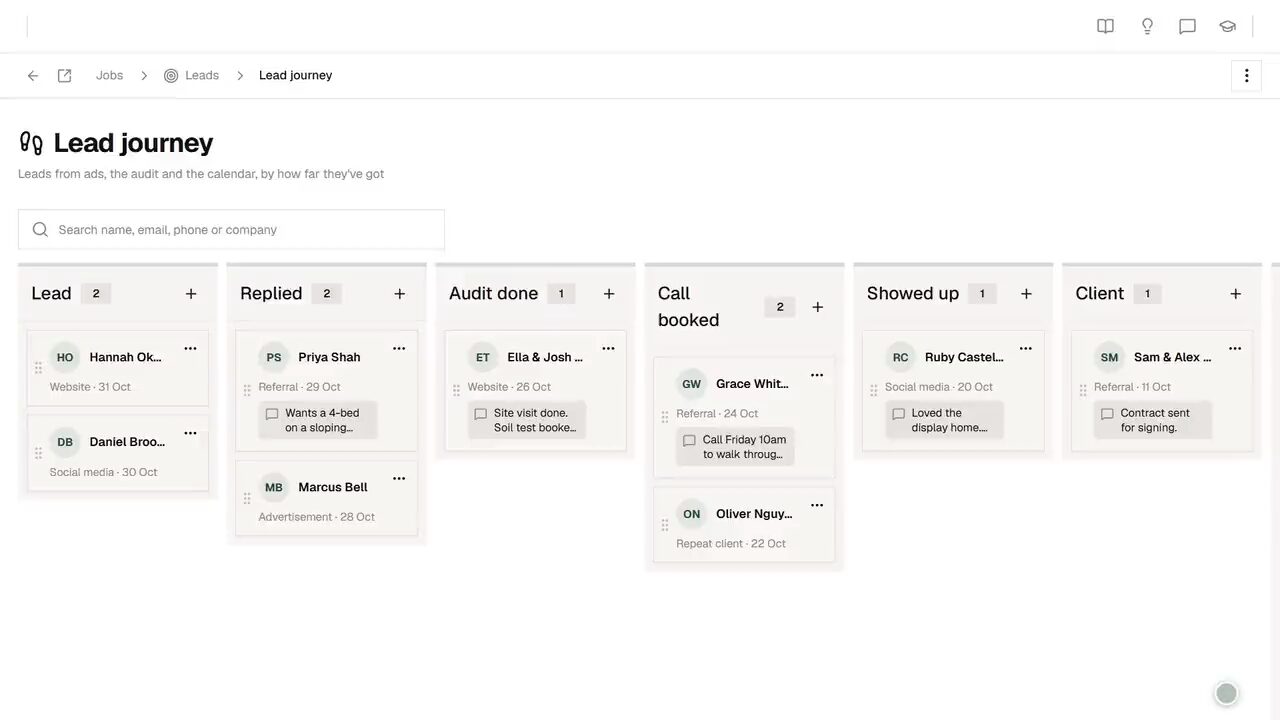 Marketing and e-signing, built for a home-builder platform.
-
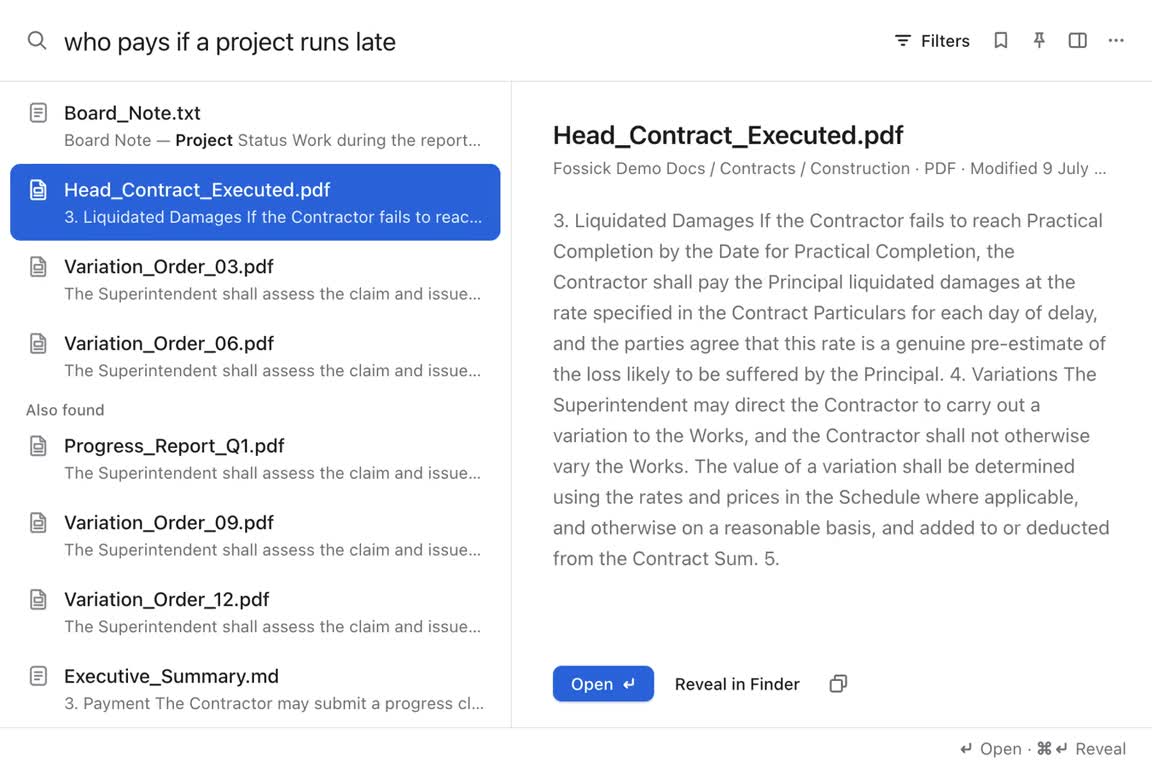 Fossick finds a document by what it says.
Book a free 30-minute call.
We look at where your team's hours go and tell you the first thing worth building, whether you hire us or not.
Not ready for a call? See what paperwork costs you or send us a note.
More guides
- Who owns custom software?
- How do you choose a software developer?
- Custom or off-the-shelf software: which do you need?
- MRP and job shop software
- Construction software for small builders
- Warehouse management systems
- See two systems we've built, running
Sources
- Clutch, Software Development Company Pricing Guide 2026, updated 21 September 2026. Based on verified client reviews.
- GoodFirms, Custom Software Development Cost Survey 2026, press release, 17 March 2026. Survey of more than 100 software companies.
- Accelerance, 2026 outsourcing rate trends, 24 November 2025. Survey of 60 software firms.
- US Bureau of Labor Statistics, Software Developers, Quality Assurance Analysts, and Testers, 2025 median pay.
- IT Jobs Watch, Software Developer contract rates, UK, six months to 1 November 2026.
- Robert L. Glass, Frequently Forgotten Fundamental Facts about Software Engineering, IEEE Software, May 2001.
- Reserve Bank of Australia, Exchange rates, 30 October 2026: US$1 = A$1.42, £1 = A$1.90.
All sources checked 1 November 2026.